
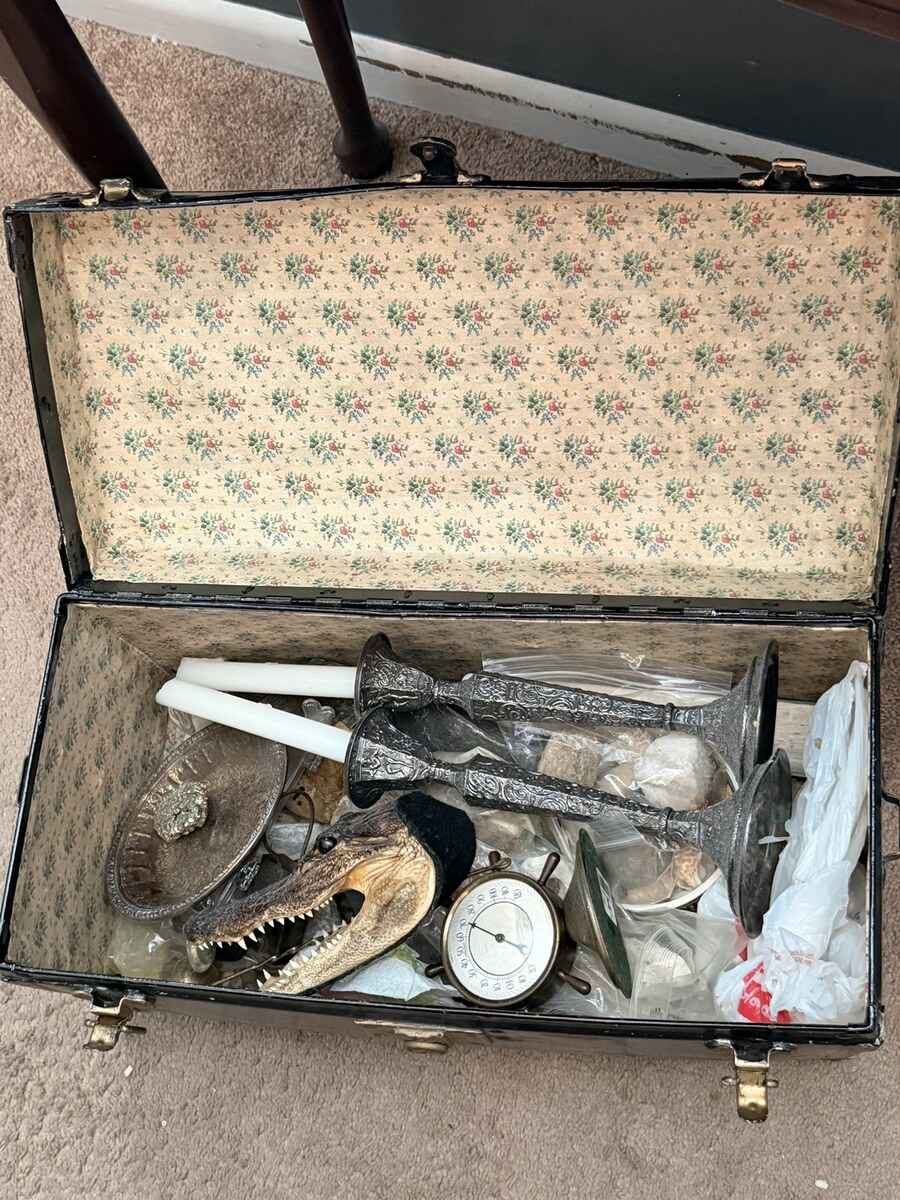
If opening a storage trunk feels like opening a whole second to-do list, let’s make the job smaller. You do not need to empty the entire house or decide the future of every keepsake today. Start with what is in the trunk, what you actually use, and what needs a safer home.
Make a little room to sort
Choose a clear spot nearby and gather a few containers you already have: a basket for keep items, a bag for donations, and a small box for items that need a different home. If the trunk is heavy, awkward, or stored up high, ask for help before moving it. Keep children and pets away from the work area, especially if the contents include fragile pieces, sharp edges, or small parts.
Group by the next time you will need it
Instead of sorting by “good” and “bad,” sort by use: next season, special occasions, active keepsakes, and not currently needed. When items have a season, put the next-use group where you can reach it without unloading everything else. A simple label with the season and contents can spare future-you a guessing game.
Ask four practical questions
- Would I look for this on purpose? If you cannot imagine when you would use it, pause before saving it just because it fit in the trunk.
- Does it need gentler care? Fabric, paper, photographs, and fragile decorations may need dry, clean, protected storage. Avoid putting delicate items under heavy objects.
- Is it complete and safe? Missing pieces, broken cords, exposed batteries, and damaged items deserve a careful check before reuse or donation.
- Does this space make sense? Leave room to close the trunk without forcing the lid or crushing the contents.
Keep the memory without keeping every object
Sentimental things can matter even when they are not practical. Keep the one piece that tells the story best, take a private photo of an item you are releasing, or write a short note about who gave it to you and why it mattered. A memory does not become less real because it takes up less space.
Make the trunk easy to reopen
Place heavier, sturdy items at the bottom and protect anything delicate above them. Use a clean cloth or an existing box as a divider when it helps; do not buy a new system until you know what problem remains. Keep a short inventory on paper or in a note: what is inside, where the trunk lives, and the next season to revisit it.
When you finish, stop. You do not have to sort every holiday bin, closet shelf, or family keepsake in one sitting. If you want another small home reset, see the one-basket bedroom reset and the holiday decoration sort.
No affiliate recommendation is included in this household guide; I do not want to send you shopping for a storage problem you may be able to solve with what you already have.