
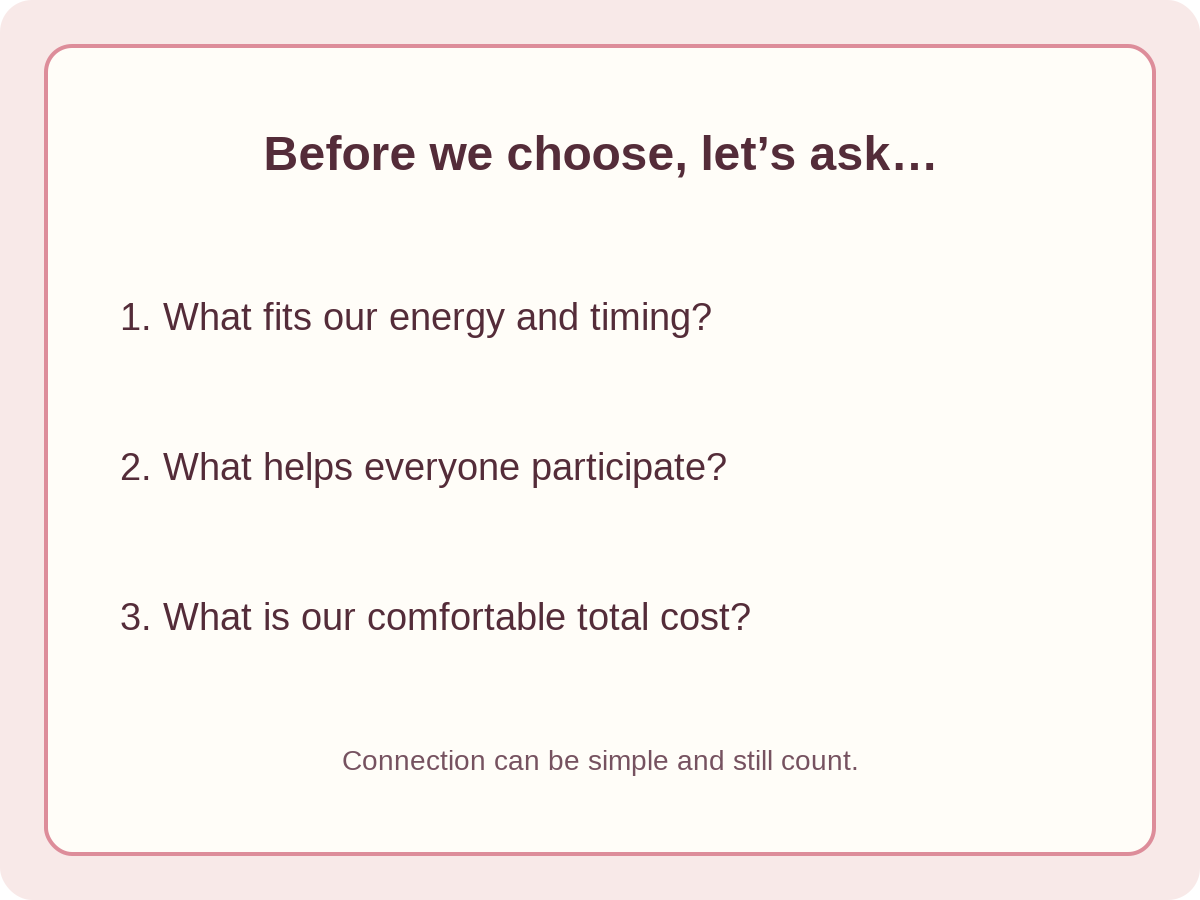
When we choose an activity for the family, I want the plan to feel like an invitation—not another thing everyone has to endure. Asking a few questions first makes room for real preferences without putting the whole decision on one child or promising a perfect day.
1. What fits our energy and timing?
Think about the day you actually have. Is everyone rested enough for a long outing, or would a short stop close to home feel better? Check nap windows, work schedules, weather, travel time, and the energy it takes to transition back home. A plan that fits the family’s capacity is often more welcoming than the biggest or most impressive option.
Ask each person for one preference: outside or inside, active or quiet, early or later. A young child may need concrete choices instead of a wide-open “What do you want to do?” You can still guide the choices based on safety, time, and what your household can manage.
2. What helps everyone participate?
Consider mobility, sensory needs, food needs, bathroom access, age range, and whether a quieter option or break is available. Ask the venue about accessibility and current policies rather than guessing from a photo or old post. If someone in your family needs a predictable plan, share the sequence: where you are going, what happens first, and when you will head home.
Participation does not require everybody to love the same thing. A family activity can include a short shared part and then flexible roles: one person reads the signs, another picks a snack, someone else chooses the route back. If the activity is not workable this time, choose a home-based alternative without presenting it as a consolation prize.
3. What is our comfortable total cost?
Before agreeing, look beyond the ticket or signup fee. Include transportation, parking, meals, equipment, add-ons, and any required supplies. Decide what fits after household needs, then tell everyone what is included. If the plan is free, that still may require time, a ride, or supplies already at home.
This is a good moment to name one boundary gently: “We can do the activity, and we are bringing snacks instead of buying them there.” A clear plan helps children understand that the answer is about the family’s priorities, not how much fun they deserve.
Let children have a voice without carrying the whole plan
Listening does not mean every suggestion becomes the final choice. Try: “Tell me what sounds fun about that,” then repeat what you heard and offer two realistic options. A child can feel included even when the family chooses a different plan. If opinions are split, take turns choosing a small part—music for the drive, which park loop to walk, or which game to play when you get home.
Pinterest’s 2026 Parenting Trend Report describes growing interest in screen-free activities and family traditions. That trend is a useful prompt, not a rule: connection can be a short walk, a library stop, a shared meal, or ten minutes of play that fits your people. For low-cost options, browse low-cost family day ideas and free family activities.
No affiliate recommendation is included. This guide is about listening and choosing; no product or signup is needed.